
Finding Silence on the Court
Sep 07, 2026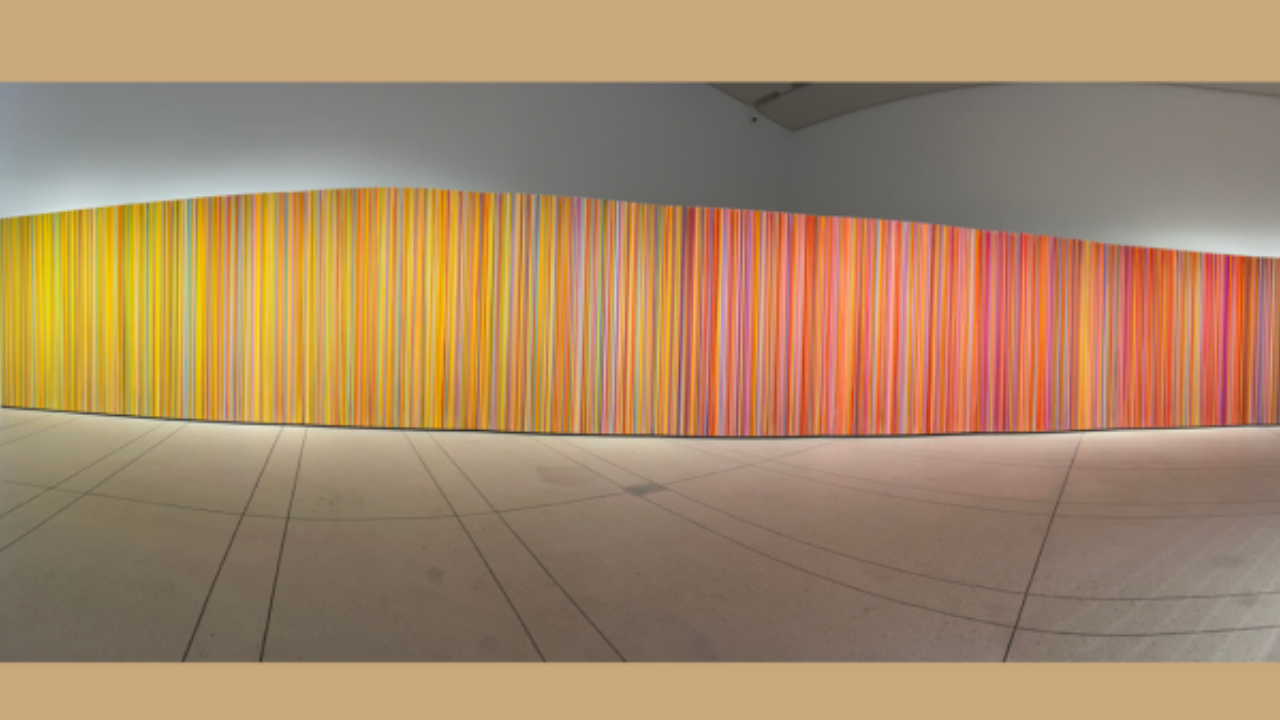
Most of our time on the pickleball court is spent with our heads full.
The score. The shot you just missed. Your partner's mood. Your opponent’s serve, which you are pretty sure is illegal. The wind. Four players moving (or inexplicably not moving), a ball traveling through the universe, and a conversation running roughshod over all of it inside your mind.
There is no silence in there. Just noise.
In a way it’s understandable. Pickleball is a busy sport. There is a lot coming at you, and trying to process it all feels like the responsible thing to do. It feels like being alert. The alternative might feel like carelessness, like you are letting something slip past you.
But here’s the thing. When you try to see everything, it’s hard to see anything clearly.
Tony was at an art exhibit recently in Tampa. The name of it was "Silence Before Sound." Sit with that title for a second. Silence before sound.
One room in the exhibit was large; about the size of a small house. It held just three pieces of art. One large painting curving along the wall (see the photo), one large ceramic piece, and one smaller piece. That was it. The rest of the room was empty.
That was not an accident. More art could’ve been displayed. They could have filled the walls with it. But the curator and the artist decided to leave most of that room empty. The reason? Because emptiness is often what’s needed to let you see what’s there. Stand back, and you can take in the whole painting. Walk toward the painting and back away from it without anything else pulling at you. The empty space is not what was left over. It was placed there on purpose.
Now picture the same room with 53 pieces in it. You would walk out of there having seen none of them.
That second room is a metaphor for how our brains often feel while playing pickleball.
Our pickleball brains could use a museum curator
You have a supercomputer between your ears. It is powerful. But like any engine, it has a range where it operates well and a range where it redlines. Push the RPMs into the red, and the engine stops doing its job. Not because it is weak, but because you are asking it for more than it can deliver at that speed.
That is what is happening when you come off the court feeling frazzled and unable to recall a single rally clearly. You were not short on ability. You were short on space. Your bandwidth got spent on 53 things instead of three.
Empty space is what gives the most important things room to register.
How to put some silence in your game
First, start before you play. This is the easiest place to do it and the place where you have the most control, because the noise hasn’t started yet. Get to the courts a few minutes early. Stay in the car for a moment. Sit somewhere where you won’t feel pressure to jump into the very next game. Take thirty seconds of quiet, or put on a song that settles you. Look around. Notice where you are, and think about why you are there and what you are about to do.
Taking this time to self-regulate before you play may feel strange the first few times. Your body is used to a different sequence. The one where you show up at the courts, they need a fourth, you jump in, somebody calls the score, and the chaos begins. Everything that happens afterward is connected to a hectic start.
Second, step onto the court having chosen your “three pieces of art” (or maybe just two or one). Not 53. Decide before the first serve what you are paying attention to today. Maybe it’s your intended margin over the net on your return of serve. Maybe it is “get past four.” Just one or two things. Three at the most.
Then here is the part that matters: everything else becomes empty space. Not because it is unimportant, but because you have chosen where you want to place your attention today.
Third, take a moment when you are done playing to think about your day on the court. If it was rough, find the good in it and take that with you. If it was great, pause long enough to enjoy it before you move on. The pause is what lets you decide what carries forward.
Extra coaching tip
Try this with a picture in your mind. Zoom all the way in on a piece of brushwork, and it looks like chaos. Black marks scattered everywhere with no order to them. Pull back a little and shapes appear. Pull back further, and you are looking at a tree.
A pickleball rally up close is that same mess. Shots everywhere, decisions everywhere, bodies everywhere. When you find yourself locked in tight on one ugly moment, that is the zoomed-in view. Step back. The space around it is what turns the mess into a picture.
It’s the same with your development as a player. You can chase the small marks one at a time and never see the whole thing, or you can see the whole thing first and then choose one area to work on.
Start with the silence before you step out. The noise will be waiting. Give yourself a moment before it begins, and you will meet it in better shape.
This post was adapted from Episode 310 of the Pickleball Therapy podcast, Silence Before Sound, with the help of AI, then edited for accuracy and clarity by the TRP coaching team before publishing.