Out Balls – The Team Approach
Jul 29, 2026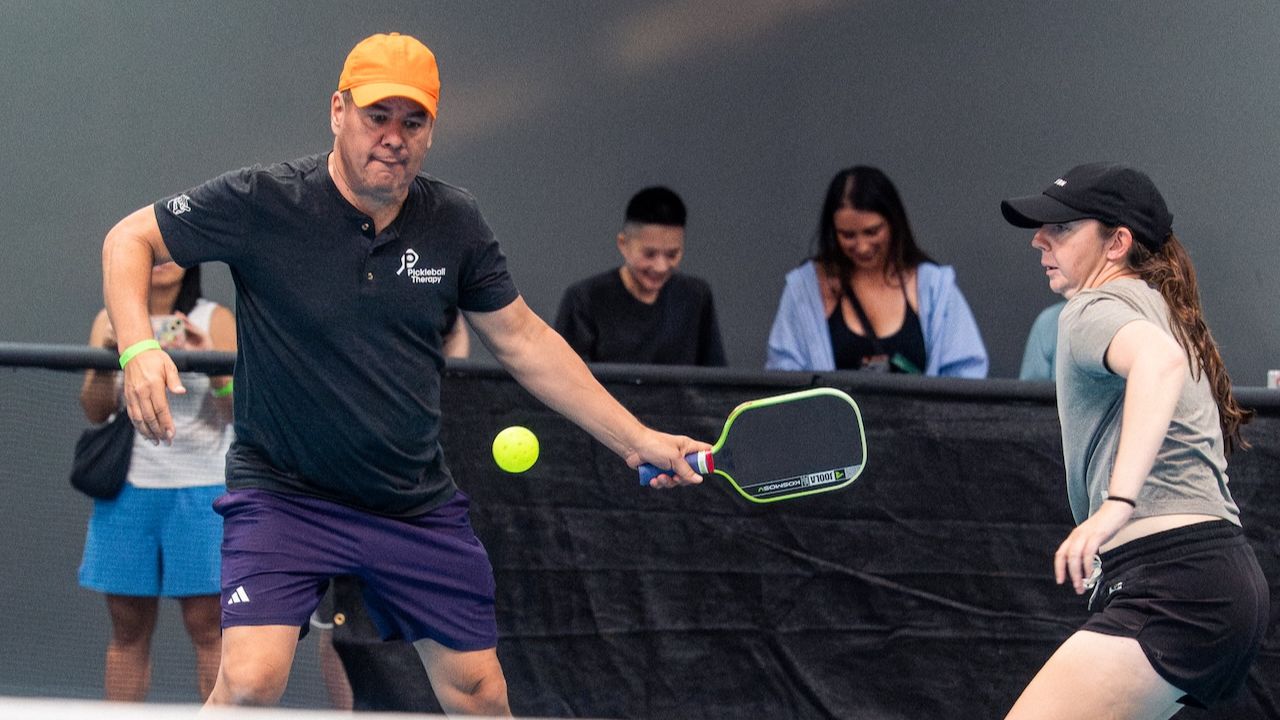
Your opponents are serving, up 10-8-2. But you and your partner have been making a comeback. The momentum is clearly on your side. If you can win this rally and side them out, you’re confident you can complete the comeback victory.
With the game hanging in the balance, your opponent sees an opportunity and drives the ball. The ball is hit hard and heading straight toward your partner.
You notice that the ball is traveling around shoulder high. The shot is probably going to land out of bounds, and you will win the rally. You're going to get your chance to get the ball back and win the game.
But, hold your horses, you look on in disbelief as your partner reaches up – nearly head level – to hit the ball. They miss the volley, and it’s over. Game goes to your opponents 11-8.
Whose fault was it?
Before answering this question of whose “fault” it was, I am not ascribing any negative meaning to the term “fault” as used here. Instead, “fault” merely assigns responsibility for the act.
In this case, we are trying to determine who made the error – because doing so will allow us to work toward avoiding the error in the future.
This is also not a matter of walking off the court announcing, “We lost the game because my partner hit an ‘out’ ball.” Not a blame game here.
My guess is that you may be a bit disoriented right now. I told you that your partner hit the ball that was likely going out of bounds. So any “fault” – even if not intended to be accusatory – clearly rests with your partner.
Or does it?
You are playing a team sport
Let’s take a moment to consider the dynamics of playing pickleball doubles.
Pickleball doubles is, at its core, a team sport. Baseball, basketball, soccer, football – all team sports.
Pickleball doubles is the same. Though the team is comprised of only two players, these two players share objectives as well as the same side of the court. If one of the players on your team wins the game, then you both win the game. Same for a loss.
Taking the blinders off
Despite the reality that pickleball doubles is a team sport, many doubles games are played in silos: each player plays “their” side of the court. If the ball gets hit toward them, they have something to do. But if the ball is not hit to them, then it is not their problem.
We coach our players to take their blinders off (think of the blinders put on horses to keep them looking forward and limiting their peripheral vision). Blinders keep us looking forward, waiting for the ball to come our way. We are unable to see what is happening right next to us.
This team-centric approach to your pickleball is Phase 2 of the Three Phases of Pickleball. If you’re interested in learning more about the Three Phases of Pickleball – including how you can use them to boost your game – click on the link at the end of this article.
The fault may be yours
Back to the question of fault: whose fault was it that your partner hit the “out” ball?
The answer to this question – as it seems to be in much of life – is “it depends.”
If you quietly stood there while your partner reached out to hit the ball, then I regret to tell you that the fault would be yours.
“But how can that be?”
Because you are playing a team sport. And in a team sport, each player is expected to do what they can to give their team the greatest chance for success.
Your partner was stressing about having to track and hit the ball coming their way. You, on the other hand, had no such stress.
Is it not fair to ask that:
- If there is no pressure on you (from having to track and hit the ball)
- And you identify that the ball is likely heading out of bounds,
that you actively participate in the solution?
Contributing to the team
The solution for your team in the above scenario is for your partner to let the ball go. The way you contribute toward your team solving the puzzle of the rally in its favor is to help your partner by letting them know not to hit the ball.
“Out” or “Let it go.” You can also use “no” (this is the one I revert to), but it can be misheard as “go.”
Whatever phrase you choose, that is your role here. Take some pressure off your partner and get your team closer to the best solution – letting the ball go.
If you carry out your role and your partner still hits it, then the “out” ball error belongs to your partner. Again, not as blame – simply as responsibility so we can play better each time.
Your partner has two choices:
- Get better at identifying and laying off out balls (a Phase 1 approach) and/or
- Get better at listening to their partner’s communication (a Phase 2 approach).
Your job – as the non-hitting player – is to be an active participant and begin to adjust the blinders when you play so that, one day, you play with no blinders at all.
Learning through the Three Phases
“Out” balls is an area that can be explored from each of the Three Phases of Pickleball. Note that “out” is in quotations because not every “out” ball does, in fact, land out of bounds.
- Phase 1 – Learning how we each have agency over which shots we hit and which we do not. Also learning the conditions in which it is usually better to let the ball go. Finally, practicing so we can train our brain that not every ball needs to be hit.
- Phase 2 – the team approach to “out” balls. This phase was covered in depth above.
- Phase 3 – Learning how to “read the room” to better anticipate hard-hit shots. From what position does your opponent like to attack? Do they attack from the forehand? Backhand? Both?
You can find improvement – in this case specific to “out” balls – in each of the three phases. Having the 3-Phase framework allows you a better structure from which to continue to grow your game.
If you enjoyed this Phased approach to “out” balls, join us at one of our upcoming pickleball camps. A well-developed curriculum is central to our camp experience.
Be well,
Tony